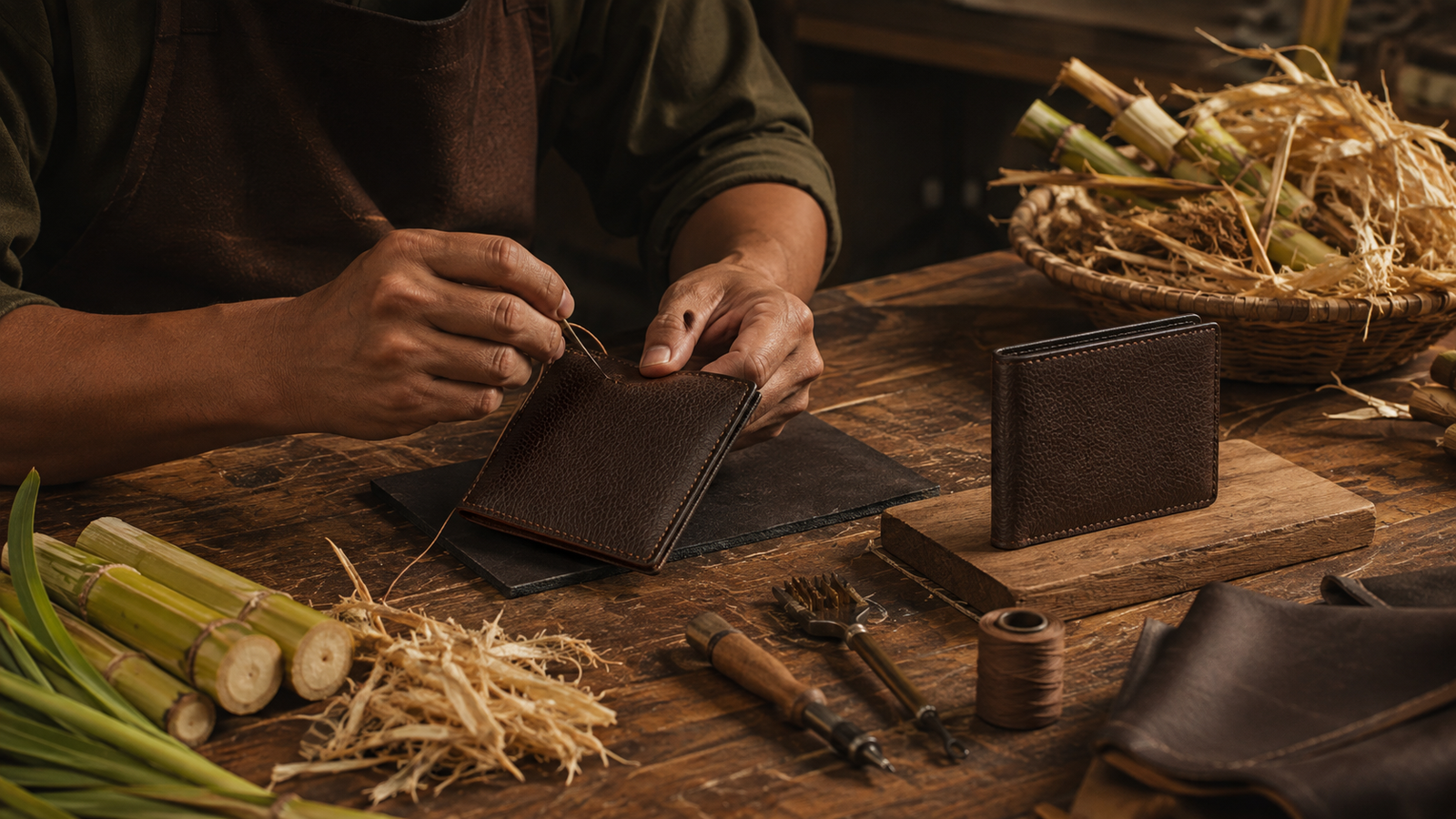
Sustainable leather often costs more because it involves responsible sourcing, innovative materials, and thoughtful manufacturing. While the upfront price may be higher, these products are designed to offer long-term value through quality, durability, and a lower environmental impact.
What Contributes to the Cost?
Unlike conventional materials that are often mass-produced, sustainable leather may use renewable resources such as agricultural waste and require specialized production processes. Many brands also invest in ethical sourcing, quality craftsmanship, and smaller production batches to ensure better products and reduced waste.
In addition, research and innovation involved in developing sustainable materials can also influence the final cost.
Looking Beyond the Price Tag
The value of a product isn’t measured by price alone. A well-crafted, durable accessory that lasts longer can reduce the need for frequent replacements, making it a more practical choice over time.
When buying sustainable products, it’s worth considering factors such as material quality, durability, responsible manufacturing, and environmental impact rather than focusing only on the initial cost.
Investing in Better Choices
Choosing sustainable products is an investment in quality and conscious consumption. Every thoughtful purchase encourages innovation and supports more responsible manufacturing practices.
At Srijeevanam, we create lifestyle products using plant-based materials derived from agricultural waste, combining sustainable innovation with quality craftsmanship to offer products that are designed for everyday use and long-term value.
Plant-Based Leather vs Vegan Leather: What’s the Difference?