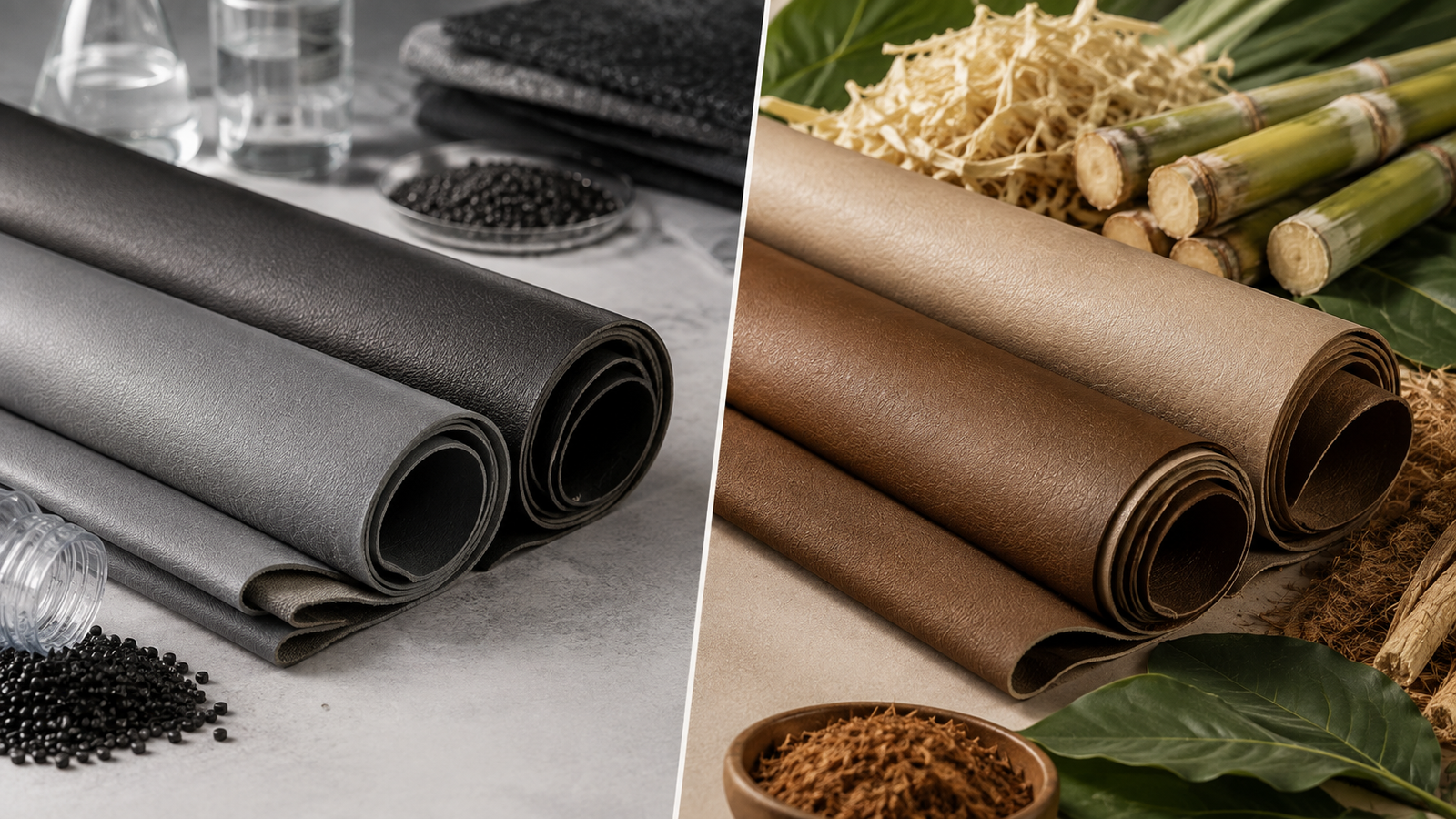
Plant-based leather and vegan leather are not the same. Vegan leather refers to any material that replaces animal leather, while plant-based leather is a type of vegan leather made wholly or partly from renewable plant materials. Knowing the difference can help you make more informed and sustainable purchasing decisions.
What Makes Them Different?
Vegan leather is an umbrella term for leather alternatives that do not use animal hides. It can be made from synthetic materials like PU (polyurethane) and PVC (polyvinyl chloride), as well as bio-based materials.
Plant-based leather is a category of vegan leather that incorporates renewable resources such as agricultural waste, fruits, or natural fibers. Some plant-based leathers may still contain synthetic components to improve durability and performance, but they reduce reliance on fossil-based materials.
Which Is the More Sustainable Choice?
The environmental impact depends on the material used. Conventional PU and PVC vegan leather avoid animal hides but are petroleum-based. Plant-based leather makes use of renewable resources and helps give agricultural by-products a second life. While no material is completely impact-free, it offers a more resource-conscious alternative.
Choosing the Right Material
The best choice depends on your priorities, whether it’s durability, design, or sustainability. Looking beyond the label and understanding what a product is made from helps you make a more informed decision.
At SriJeevanam, we craft lifestyle products using plant-based materials derived from agricultural waste, combining thoughtful design with a commitment to responsible innovation and sustainability.