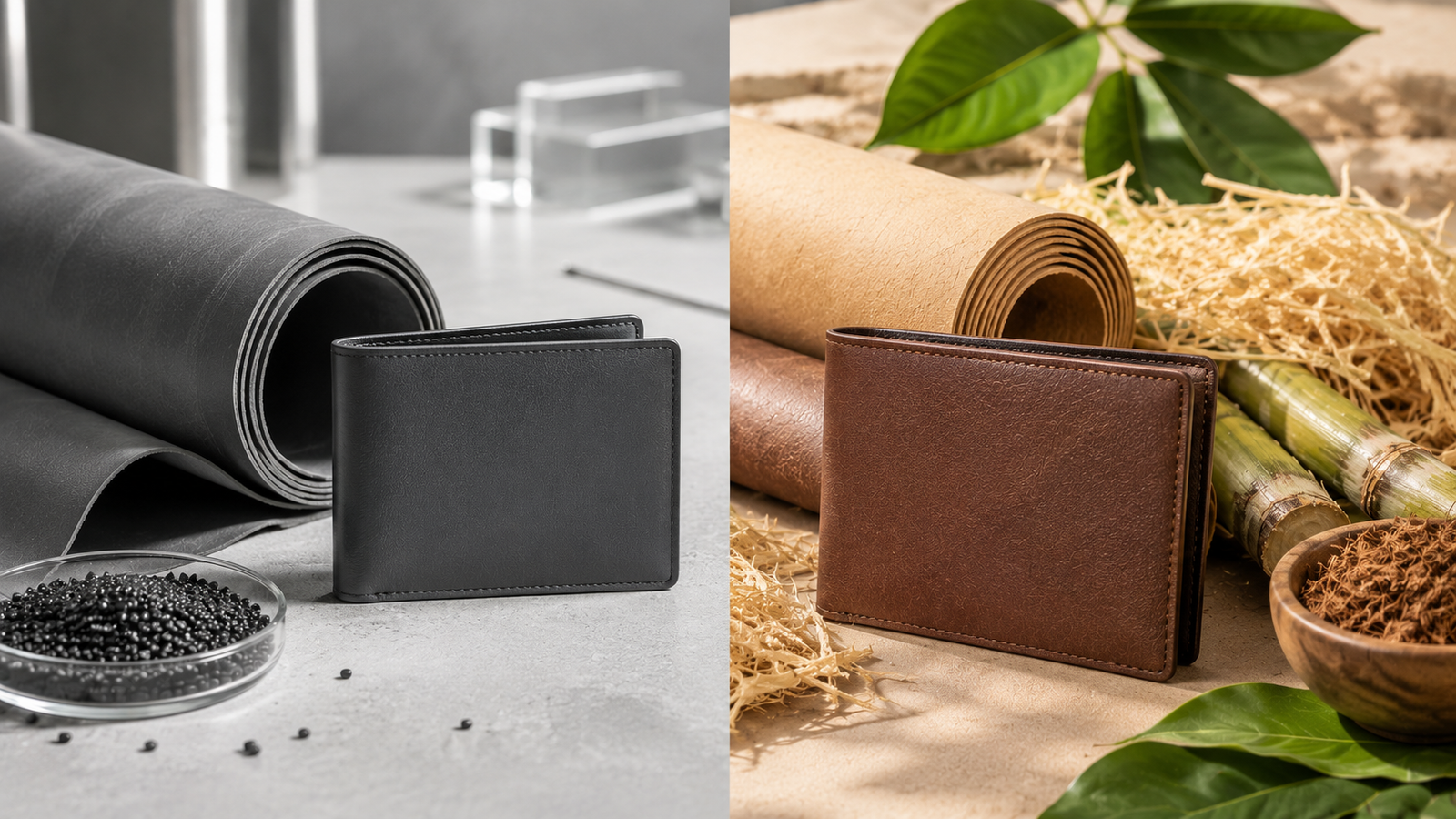
Plant-based leather and PU leather may look similar, but they differ in how they’re made and their environmental impact. PU (polyurethane) leather is a synthetic material derived from petroleum, while plant-based leather incorporates renewable resources such as agricultural waste. Understanding these differences can help you choose a material that aligns with your needs and values.
How Are They Different?
PU leather is widely used because it is affordable, lightweight, and easy to maintain. However, it is primarily made from petroleum-based materials.
Plant-based leather, on the other hand, uses renewable plant resources like agricultural waste, often combined with other materials to improve durability and performance. This approach helps reduce reliance on fossil-based resources while giving agricultural by-products a second life.
Which Is the Better Choice?
The right material depends on what matters most to you. PU leather offers affordability and practicality, while plant-based leather is designed with sustainability in mind. Although no material is completely impact-free, choosing products made with renewable resources can support more responsible manufacturing and resource use.
Rather than focusing only on appearance, it’s worth understanding how a product is made and the materials behind it.
Choosing Sustainably with SriJeevanam
At SriJeevanam, we create lifestyle products using plant-based materials derived from agricultural waste. By combining thoughtful craftsmanship with sustainable innovation, we aim to offer products that are both functional and environmentally conscious, helping consumers make informed choices for a more sustainable future.