Yes, Packaging can make a product look sustainable without necessarily making it environmentally responsible. Brown paper, earthy colors, leaf illustrations, and labels such as “eco-friendly” can create a positive impression, but they do not tell packaging should be disposed of.
For brands like SriJeevanam, which offers jute products, plant-based leather accessories, and conscious gifting solutions, this distinction matters. Sustainability should be reflected in the product, its packaging, and how long both remain useful.
How can packaging give a false impression of Sustainability?
A kraft-paper box may look more environmentally friendly than plastic packaging, but its actual impact depends on factors such as material sourcing, production, transport, and disposal. Similarly, a product labelled “compostable” may require industrial composting facilities that are not available to every consumer.
The European commission reported that 53.3 % of environmental claims examined in a 2020 review were vague, misleading, or unfounded, while 40% lacked supporting evidence. These figures cover environmental claims broadly, not packaging claims alone.
Real-life examples: How Indian brands are making packaging more Sustainable
Nykaa: Reusing packaging and reducing unnecessary materials
Nykaa’s packaging initiatives focus on more than how a parcel looks. According to its FY2024-25 integrated annual report, the company uses corrugated boxes containing recycled materail, paper fillers where feasible, and reuses cardboard boxes in its owned-brand warehouses. It has also redesigned some luxury packaging by integrating thank-you messages directly onto boxes instead of using separate cards.
What does this teach us? Sustainable packaging can begin with using fewer materials, reusing existing boxes, and avoiding unnecessary additions. A premium unboxing experience does not always require more packaging.
Amazon India: Reducing packaging and using paper-based alternatives
Amazon India has worked to reduce single-use plastic in its fulfillment-centre packaging, replacing plastic cushioning materials with paper alternatives. Its packaging programmed also focuses on right-sized packaging and, where operationally possible, shipping products without additional outer packaging.
What does this teach us? Packaging Sustainability is not about switching from plastic to paper. It also involves asking whether extra packaging is needed, how much material is used, and how products can be delivered safely with less waste.
ITC: Designing packaging for recyclability and plastic reduction
ITC is working on packaging alternatives made from renewable fibres such as bagasse, bamboo, wood, and wastepaper. Its sustainability initiatives also include improving the recyclability of packaging, reducing plastic use, and introduced recyclable mono-material packaging in place of harder-to-recycle multilayer formats.
What does this teach us? Material choice matters, but so does packaging design. A package should be evaluated by its actual composition, how easily it can be collected and processed, and whether the relevant recycling systems are available.
What can we learn from these examples?
These examples show that sustainable packaging does not have one universal definition. For one business, it may mean using materials; for another, reducing packaging volume, replacing difficult-to-recycle materials, or designing packaging that can be reused.
For consumers, this means looking beyond brown paper, green colors, and environmental labels. For brands, it means explaining what the packaging is made of, why the material was chosen, and what customers can realistically do with it after use.
How does this connect to SriJeevanam?
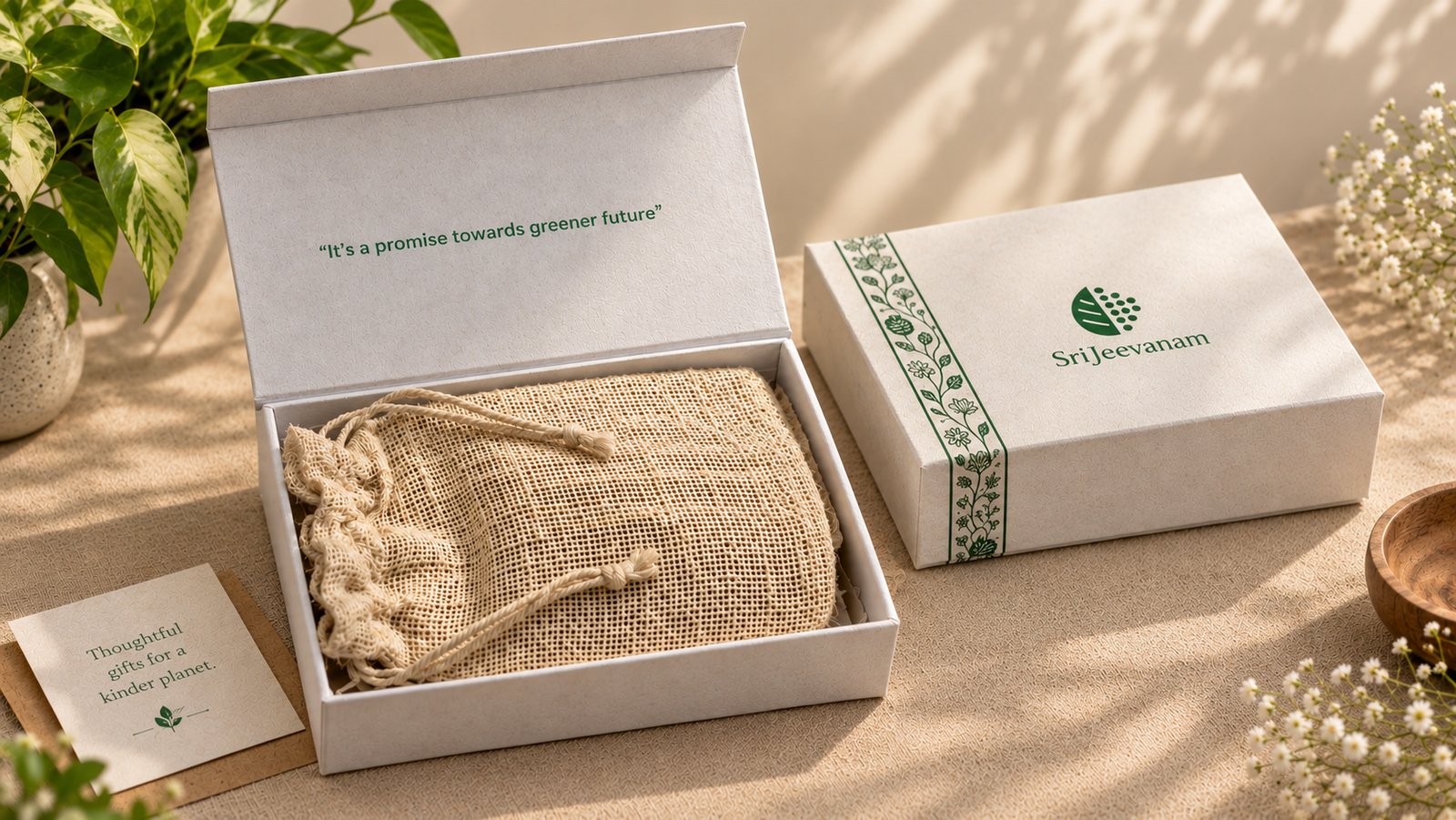
At SriJeevanam, we believe packaging should complement the thought behind a gift. Alongside our jute products and plant-based leather accessories, we use jute drawstring bags and canvas bags for packaging-options that recipients can potentially reuse for carrying or storing everyday essentials.
Our Jute Shagun envelopes also feature a separate pocket for a name card, allowing personalization without writing directly on the envelope. This makes it easier to reuse the envelope for another recipient or occasion.
These choices are not a claim that every natural-fibre package is automatically more sustainable. Their value depends on material sourcing, durability, and whether people actually reuse them. Our aim is to be packaging practical and useful beyond the moment a gift is opened.
Ultimately, Sustainable packaging is not simply packaging that looks natural. It is packaging designed with a clear purpose, honest claims, thoughtful material choices, and a realistic plan for what happens after use.