For Vegans, avoiding animal-derived materials is only one part of thinking conscious choices. PU (polyurethane) can be animal free, but that does not automatically make it a responsible material choice. Some vegans who extend their values toward environmental responsibility may choose to avoid conventional PU because of its fossil-based origins, synthetic composition and end of life challenges.
The important distinction is this: PU may solve the animal-material problem while creating another set of environmental concerns.
PU is usually based on Fossil resources
Conventional polyurethane is generally manufactured from petrochemical feedstocks. This means that although a PU product may be labelled vegan, its primary material sources can still depend on non-renewable fossil resources.
For consumers who see veganism as part of a broader commitment to reducing environmental harm, this creates an obvious question: Can an animal-free product also reduce dependence on virgin fossil-based materials?
That is one reason some conscious consumers look beyond the vegan label.
PU does not simply return to nature
Another concern is what happens after the product has finished its useful life.
Conventional PU is a synthetic polymer and is not readily biodegradable under ordinary natural conditions. A discarded PU coated wallet, bag or shoe therefor does not simply break down like an untreated natural fibre.
This become particularly relevant when products are from combinations of PU, textile layers, adhesives and hardware. Such mixed-material products can also be difficult to recycle through conventional systems.
“Vegan” does not mean “Environmentally better”
This is the point that often gets overlooked.
A product can be completely suitable for a vegan lifestyle while still relying heavily on synthetic, fossil-based materials, Therefore, choosing a vegan product does not remove the need to ask questions about resource use, manufacturing, durability and disposal.
For a vegan consumer who also cares about environmental sustainability, the goal can therefore become broader:
animal-free + thoughtful material choice + long product life.
Why material composition matters
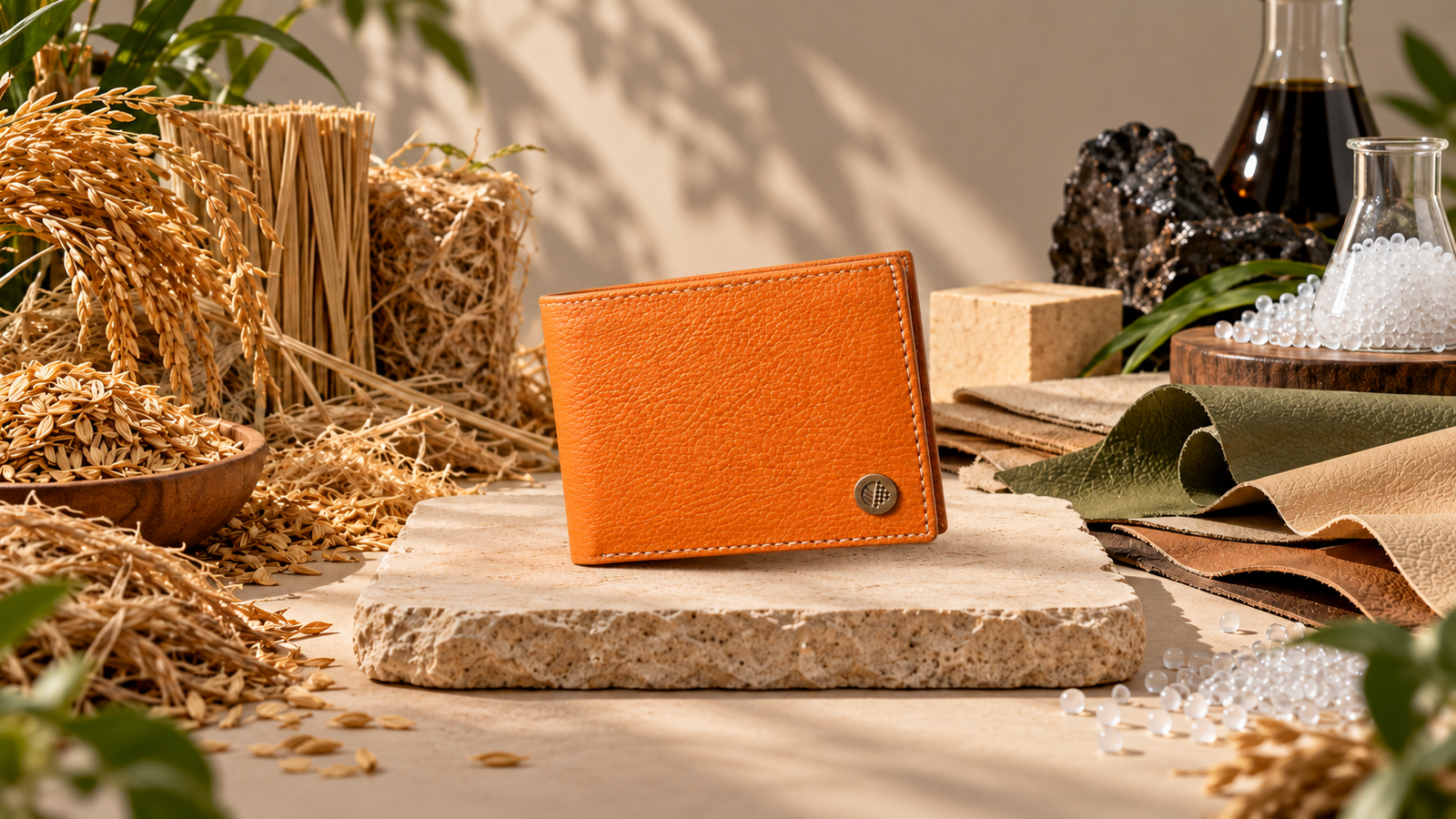
Not every alternative to conventional PU follows the same material pathway. Some newer materials incorporate agricultural residues, recycled inputs or bio-based components.
SriJeevanam’s plant-based material, for example, uses 60% upcycled agricultural residue, 30% bio-based adhesive and 10% fillers, binders and pigments, including 1% PU.
That does not make the material completely PU-free or automatically biodegradable. But it does demonstrate a different approach: using agricultural residue as the major material component rather than making a conventional PU-based material the primary structure.
SriJeevanam also uses natural jute in several products, providing another material option for consumers looking beyond fully synthetic alternatives.
So, Should Vegans Avoid PU?
If the reason is veganism alone, PU is not automatically something a vegan must avoid simply because it is PU. Vegan standards primarily concern animal-derived ingredients and animal testing.
But if a vegan’s values also include reducing dependence on fossil resources and choosing more responsible materials, conventional PU deserves closer scrutiny.
The better question is therefore not simply “Is it vegan?”
It is: “What is this vegan product actually made from?”
That distinction can help consumers move from vegan as a label toward more informed, conscious material choices.