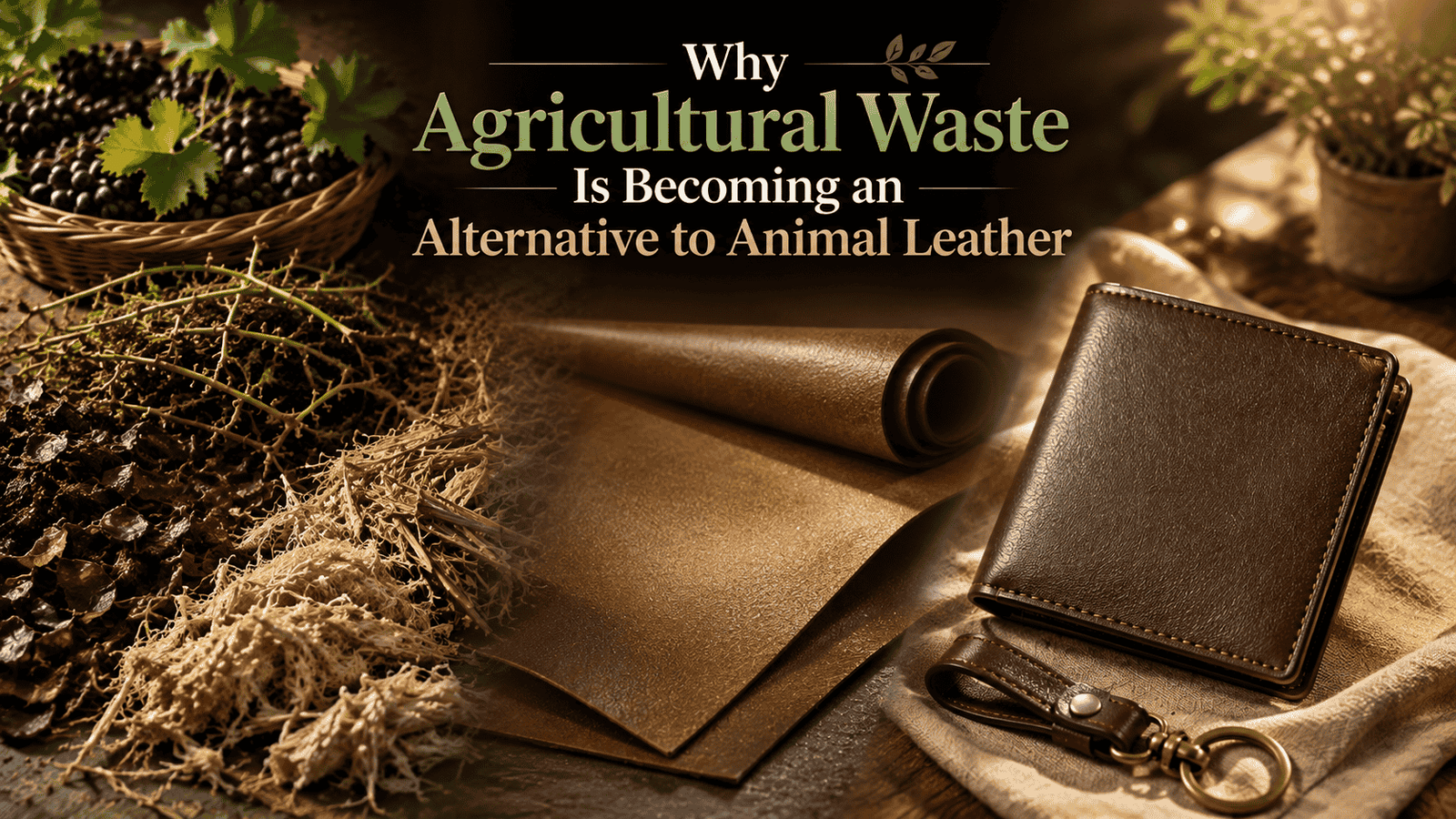
Agricultural waste is finding a new purpose in material innovation. Instead of being treated only as a by-product, materials such as grape skins, stems, citrus waste and other plant residues are being explored to create alternatives to animal leather. This approach gives existing agricultural resources another uses while reducing dependence on conventional animal-derived materials.
From Agricultural Waste to Leather Alternatives
The idea is already being explored by established fashion brands. Stella McCartney uses VEGEA, a grape-based vegan alternative to animal leather made using agricultural waste from Italian wineries. The brand has used VEGEA across products including bags, shoes and accessories.
Stella McCartney – VEGEA grape-based alternative to animal leather
Another example comes from H&M, which introduced Orange Fiber in its Conscious Exclusive collection. Orange Fiber is a textile made using citrus juice by-products, showing how agricultural waste can be developed into new fashion materials.
H&M Group – Conscious Exclusive and Orange Fiber
These examples show that agricultural by-products are no longer being considered only as waste. They can become valuable inputs for developing alternatives to conventional materials.
Why Does This Matter for Leather?
Traditional animal leather depends on animal hides and involves tanning and finishing processes. Agricultural-waste-based alternatives offer another material pathway: using plant-derived resources and developing them into functional leather-like materials.
However, agricultural waste does not automatically make a material sustainable. The complete composition, manufacturing process, durability and end-of-life all matter. For example, Stella McCartney’s own sustainability information explains that VEGEA contains agricultural elements from Italian wineries but is built on a recycled polyester base.
Stella McCartney – Sustainability & VEGEA factsheet
SriJeevanam’s Approach
At SriJeevanam, our plant-based material contains 60% upcycled agricultural residue, combined with 30% bio-based adhesive and 10% fillers, protein binder and pigments, including 1% PU.
For us, the idea is simple: can agricultural residue become part of a useful alternative to animal leather?
The answer is already being explored around the world—and we believe innovation begins by looking at resources differently.