What if agricultural waste could become something you use every day? Plant-based leather is helping make that possible by transforming agricultural residues into leather-like materials for products such as wallets, bags, and accessories. At Srijeevanam, our material contains 60% upcycled agricultural residue, giving waste a new purpose through material innovation.
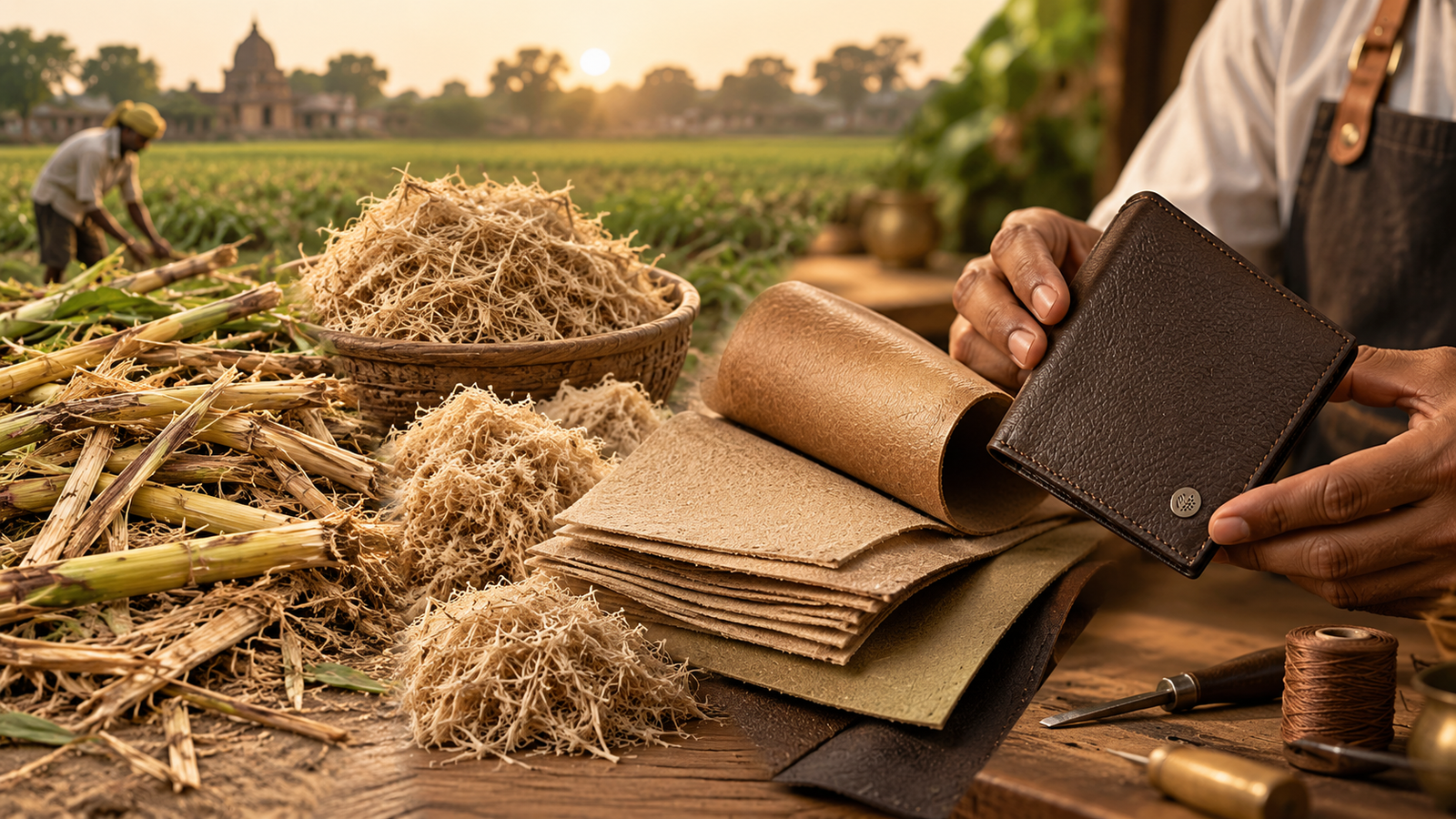
From Agricultural Waste to a New Material
Agricultural residues can contain valuable plant fibers and biomass that can be processed into useful materials. Research by India’s CSIR-Central Leather Research Institute has also explored leather-like materials made from agricultural waste such as sugarcane straw, rice straw, wheat straw, and other plant residues.
Instead of treating these resources simply as waste, material innovation can turn them into part of a new product lifecycle.
What Goes Into SriJeevanam’s Plant-Based Material?
Our material composition reflects this approach:
- 60% upcycled agricultural residue
- 30% bio-based adhesive
- 10% fillers, protein binder, and pigments
- The composition includes 1% PU
The material is designed using non-toxic chemicals and combines agricultural residue with other components needed to create a functional, durable material suitable for lifestyle products.
This is important because “plant-based” does not necessarily mean that every component comes directly from plants. Understanding the actual composition gives consumers a clearer picture of what they are buying.
From Waste to Everyday Products
The journey doesn’t end with creating the material. At SriJeevanam, it becomes thoughtfully designed products such as wallets and accessories—turning an agricultural by-product into something useful for everyday life.
This approach represents a broader shift toward upcycling, resource efficiency, and material innovation. Rather than claiming that one material solves every environmental challenge, the goal is to explore better ways of using resources and designing products.
At SriJeevanam, we believe sustainability is not just about what a product looks like—it’s also about understanding what it is made from and where those materials come from.