When choosing between handmade and mass-produced products, the difference is not simply about price. It is about how a product is made, who makes it, how much is produced, and what kind of value the product offers beyond its basic function.
What are handmade products?
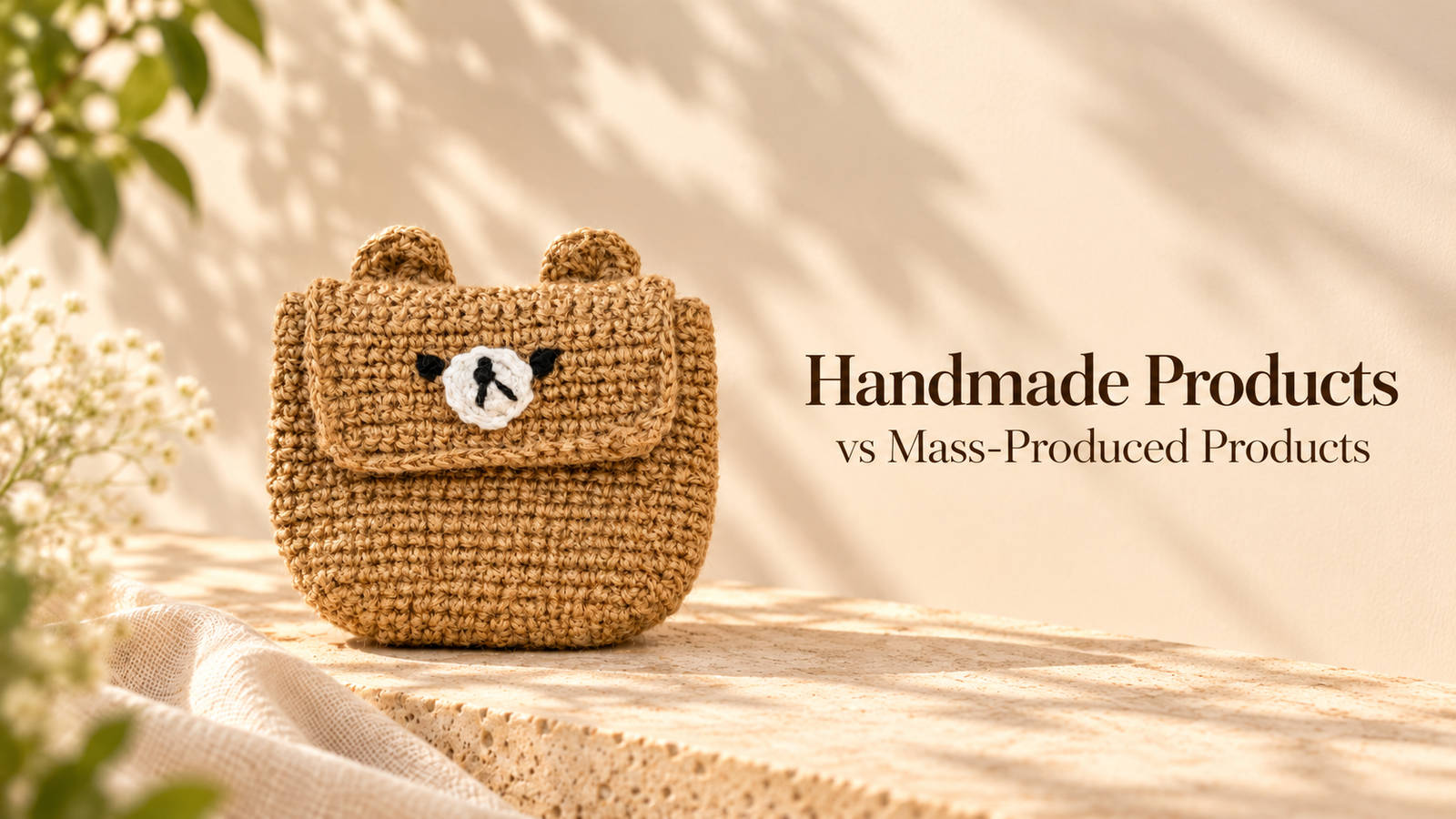
Handmade products are created individually or in small batches, often using traditional techniques and the skills of artisans. Depending on the product, some processes may involve tools or machinery, but the making process generally relies more heavily on human craftmanship.
Because each piece is handled individually, small variations in texture, stitching, shape or finish can occur. These differences are often part of what makes handmade products distinctive.
Handmade production can also support traditional skills and provide income opportunities for artisan communities, particularly when production takes place locally or within small craft-based businesses.
What are Mass-produced products?
Mass-produced products are manufactured in large quantities using standardized processes, machinery and production systems. The objective is generally to produce many identical or highly consistent products effeciently.
This model makes products widely available and can help keep manufacturing costs and retail prices lower. Standardization also means that customers can generally expect the same dimensions, finish and specifications across multiple pieces.
This model makes products widely available and can help keep manufacturing costs and retail prices lower. Standardization also means that customers can generally expect the same dimensions, finish and specifications across multiple pieces.
Mass production is particularly useful when a product needs to be manufactured at a large scale and supplied consistently to many customers.
Handmade vs Mass-produced: Key difference
| Handmade Products | Mass-Produced Products |
|---|---|
| Often made individually or in small batches | Usually made in large quantities |
| Greater involvement of artisans | Greater reliance on standardised production |
| Natural variations may occur | High consistency between products |
| Can preserve traditional craftsmanship | Designed for efficiency and scale |
| Production may take more time | Faster production at high volumes |
| Often associated with craftsmanship and individuality | Often associated with accessibility and consistency |
Why does handmade matter in sustainable consumption?
Handmade does not automatically mean sustainable, just as mass-produced does not automatically mean environmentally harmful. Sustainability depends on factors such as materials, manufacturing methods, durability, waste, transportation and product lifespan.
However, handmade production can encourage consumers to think about the people and skills behind the products they purchase. Choosing a well-made product and using it for a longer period can support a more conscious approach to consumption.
How does SriJeevanam relate to handmade products?
SriJeevanam combines handcrafted production with alternatives materials, including jute and etc. made using upcycled agricultural residue. Several of its accessories are crafted with the involvement of artisans, bringing traditional making skills into contemporary products such as wallets, diary covers, bags and gifting products.
The idea is not simply to make a product by hand, but to create everyday products where material, craftmanship and usability come together.
Handmade or Mass-produced: Which should you choose?
There is no universal answer. The right choice depends on what matters to your price, consistency, craftsmanship, material, availability, durability or the story behind the product.
Ultimately, conscious consumption is less about choosing a label and more about understanding what you are buying, how it was made and how long you are likely to use it.