A circular sustainable economy is a way of designing products and businesses so that materials stay useful for longer instead of following the traditional make-use-discard model. It can include repair, reuse, resale, recycling, upcycling, waste-to-product systems and responsible material choices. While fashion is one visible example, circularity is being explored across furniture, accessories, packaging, food waste and everyday consumer products.
What is a circular Economy in Simple Words?
A circular economy asks a simple question: What happens to a product after we are finished using it?
Instead of treating a product as waste, businesses can design it to be repaired, reused, resold, repurposed or recycled. The Ellen MacArthur Foundation describes circularity around eliminating waste and pollution, circularity products and materials, and regenerating nature.
Brands are using Circular Economy models
Patagonia is a well-known example in fashion through its worn wear approach, encouraging customers to repair, reuse and trade in products rather than immediately replacing them.
MUD Jeans focuses specially on circular denim. The company takes back old jeans for recycling and designs its business around keeping denim in circulation. it also reports using recycled materials and measuring water and carbon impacts.
H&M Group has also developed circular initiatives around collection, resale, repair, recycling and circular product design. Its approach considers a product’s entire lifestyle-from materials and manufacturing to use and end-of-use.
Circularity thinking is not limited to clothing. IKEA, for example, has collaborated with MUD Jeans on a circular denim cover for its KLIPPAN sofa, using a combination of organic and post-consumer recycled cotton.
Why is Circular Economy important for Everyday products?
Circularity matters because sustainability is not only about choosing a different material. How a product is made, how long it remains useful, whether it can be reused, and what happens at the end of its life all matter.
This is especially important for products such as bags, wallets, packaging, home accessories and corporate gifts, where extending product life can reduce unnecessary consumption.
How is SriJeevanam moving towards circularity?
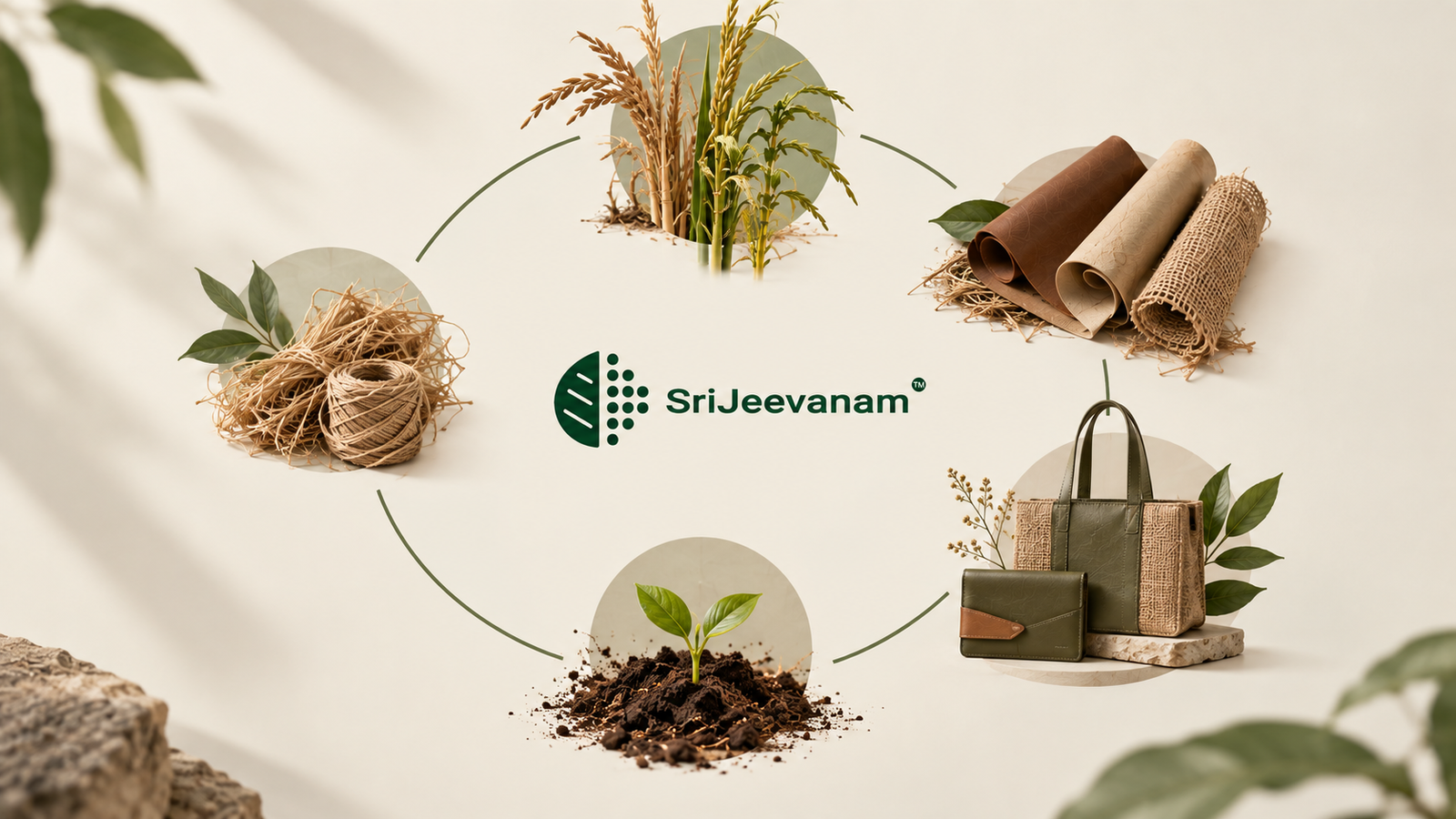
SriJeevanam applies circular thinking to everyday accessories by using plant-based and agricultural-waste-derived materials, alongside jute, cotton and hemp. Its approach focuses on using existing resources rather than simply extracting more. The brand also uses reusable packaging and works with rural women artisans. SriJeevanam states that its circular principles have been recognized by climate KIC Europe with an “Outstanding” circularity score.
The Goal is not to claim that one material or one company has solved sustainability. Circularity is a continuous process of designing better, using longer, wasting less and improving systems over time.