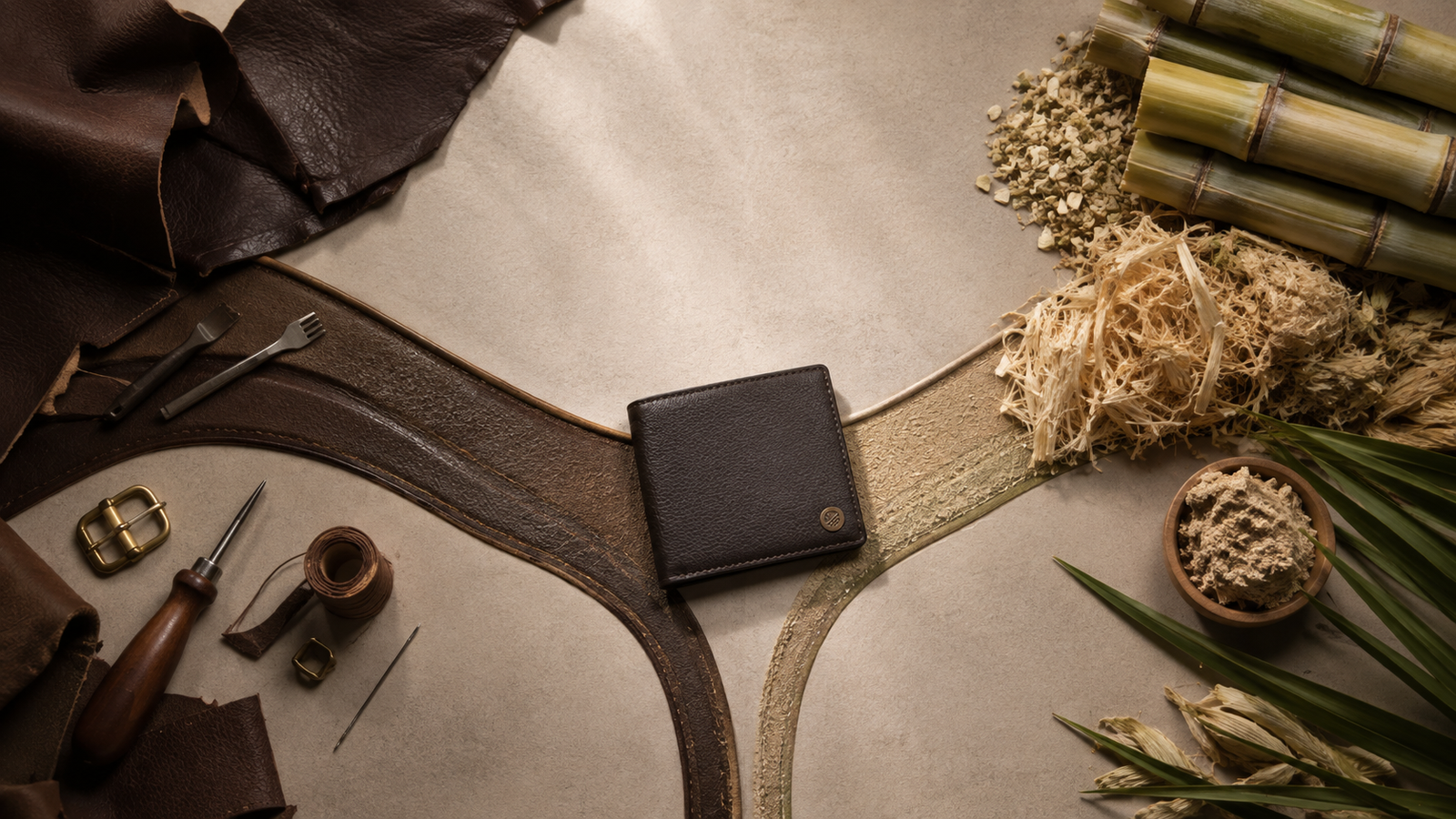
Plant-based leather can replace animal leather in many everyday applications, but it cannot completely replace it in every use case yet. Its suitability depends on the product, material composition, required durability, and performance. As material technology continues to develop, plant-based alternatives are becoming a practical option for products such as wallets, card holders, bags, and other lifestyle accessories.
Where Can Plant-Based Leather Be Used?
Plant-based leather is designed to offer an alternative to animal leather while using renewable resources such as agricultural waste. Depending on its composition and manufacturing process, it can provide the appearance, texture, and functionality needed for many everyday products.
For accessories that don’t require extreme resistance to heavy wear or harsh conditions, plant-based leather can be a suitable alternative. Its use also gives agricultural by-products a second life and reduces dependence on animal hides.
What Are the Limitations?
Replacing animal leather entirely is not as simple as choosing one material over another. Different applications require different levels of strength, flexibility, water resistance, and longevity. Some plant-based materials may also contain synthetic components to achieve the performance required for specific products.
This means the better question isn’t whether plant-based leather can replace animal leather everywhere, but where it can provide a practical and more responsible alternative.
The Future of Leather Alternatives
As research and material innovation continue, plant-based leather is likely to become more versatile and widely used. At SriJeevanam, we use plant-based materials derived from agricultural waste to create everyday lifestyle products that combine functionality, thoughtful design, and responsible material choices.
The goal isn’t simply to replace one material with another—it’s to develop better ways of creating products that consider both people and the planet.