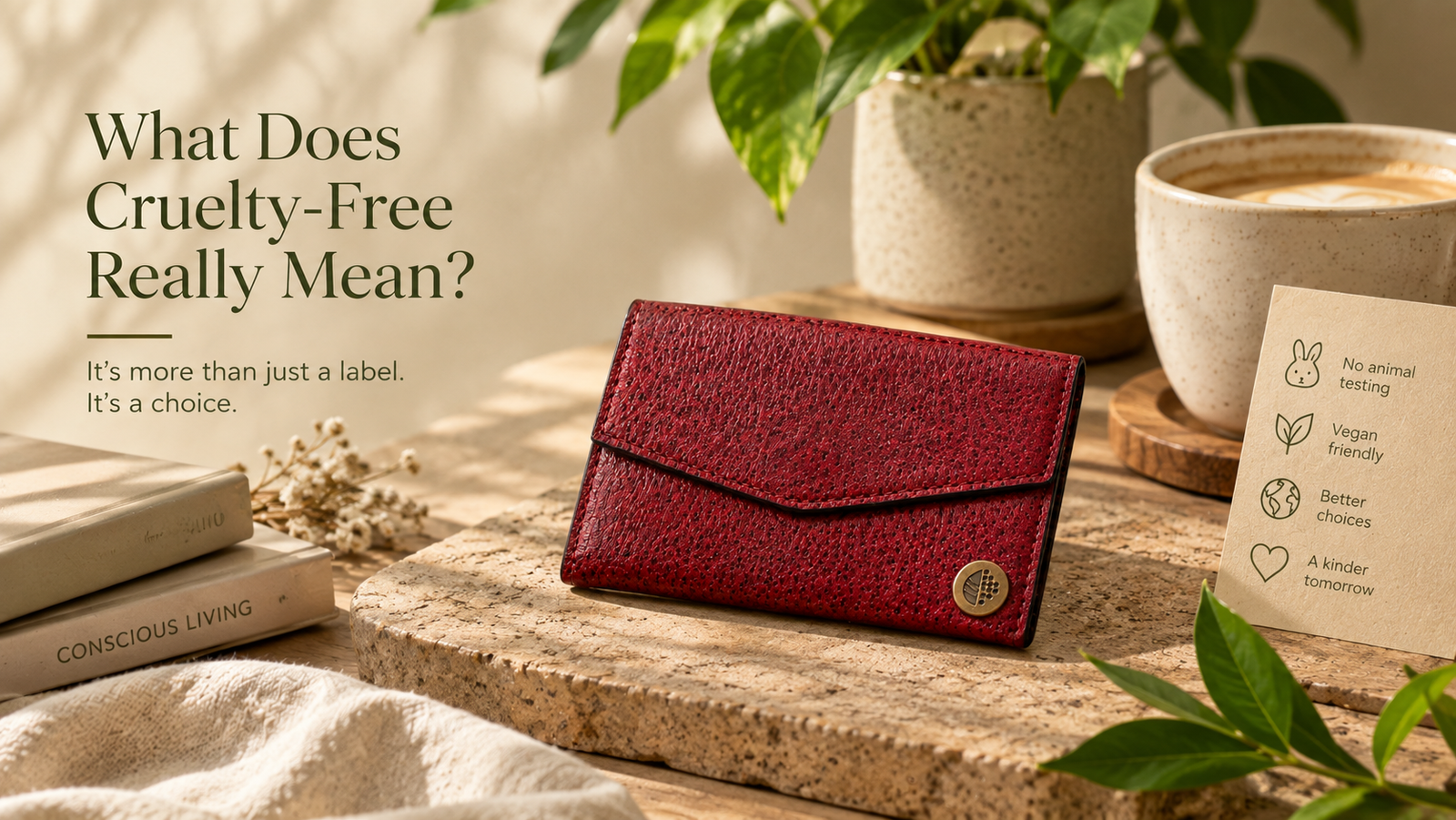
Cruelty-free generally means that a product has not been tested on animals. However, the term can be confusing because cruelty-free does not necessarily mean Vegan, animal-free or environmentally sustainable. Understanding what the label actually covers can help consumers make more informed choices.
What does Cruelty-free mean?
The term is most commonly used to describe products whose finished product and/or ingredients have not been tested on animals. However, there is no single universal legal definition of “Cruelty-free” across all markets, so the exact meaning can depend on the brand on certification standard.
This is particularly common in cosmetics and personal care, although the concept is increasingly used for fashion, accessories can consumer products.
Is cruelty-free the same as Vegan?
No.
Acruelty-free product can still contain animal-derived ingredients. For example, a cosmetic could avoid animal testing while containing ingredients such as beeswax, lanolin or other animal-derived substances. The vegan society specifically distinguishes cruelty-free from Vegan: cruelty-free generally concerns animal testing, while vegan standards also address-animal-derived ingredients and other forms of animal use.
Similarly, simply seeing the word “Vegan” on a product does not automatically tell you everything about its environmental impact.
Does Cruelty-free apply to fashion?
The idea can extend beyond cosmetics. In fashion and accessories, consumers may use cruelty-free or animal-free criteria when choosing alternatives to materials such as conventional animal leather, fur or wool.
For example, plant-based leather, jute and other natural-fibre materials can provide alternatives for people looking to avoid conventional animal-derived materials. But “plant-based” itself does not automatically mean biodegradable or environmentally superior the complete material formulation and lifecycle still matter.
How can you check cruelty-free claim?
Look beyond a simple claim printed on packaging. Independent certifications can provide more specific standards and verification. Humane world for Animals recommends checking recognized certification databases and being cautious about vague statements such as “not tested on animals,” which may not explain whether ingredients or suppliers were covered.
For vegan products, certifications such as The vegan society’s Vegan trademark cover both animal-derived ingredients and animal testing according to their standards.
What does Cruelty-free mean for SriJeevanam?
At SriJeevanam. the focus is on creating leather-free accessories using plant-based and natural-fibre materials. Our products are designed as alternatives to conventional animal-leather accessories, including Wallets and Cardholders.
For us, the idea of conscious design is not only about a label. It is about understanding where materials come from, how they are made and what role they can play in everyday products.
The bottom Line
Cruelty-free primarily relates to animal testing: vegan goes further by addressing animal-derived ingredients and products. When choosing a conscious product, it is useful to look beyond individual labels and understand the material, manufacturing process and relevant certifications.