Yes, Agricultural waste can be processed into flexible, leather-like sheets that can be used for products such as wallets, bags, footwear and other accessories. Instead of treating crop residues only as waste, researchers are developing ways to extract and restructure plant fibres into materials that can offer an alternative to conventional leather and some synthetics leather materials.
This is no longer only a laboratory concept in India, CSIR-Central leather research institute (CSIR-CLRI) has developed leather like materials using agricultural residue including rice straw, wheat straw, sugarcane straw, sorghum stem and sorghum straw. The institute describes these materials as flexible sheets suitable for textiles, leather, packaging and lifestyle applications.
How s Agricultural waste turned into Leather like material?
Agricultural residues contain plant components such as cellulose, lignin and hemicellulose. These fibre can be processed, treated and combined with suitable binders or polymers to create a structured sheet.
For example, CSIR-CLRI’s documented process involves treating agricultural waste. forming the resulting material into sheets, drying it and applying surface finishing techniques similar to those used for leather like products.
Other research from CSIR-NIIST has explored residue such as mango peels, banana stems, pineapple waste, corn husk, rice residues and water hyacinth for developing vegan leather materials.
Can these materials actually be used for products?
Yes, the Indian government reported in February 2026 that CSIR-CLRI had licensed seven enterprises for commercial use of vegan leather like materials developed from materials including mango peels and rice wheat residues. Products made by licensees included wallets, handbags, accessories and sheet materials for lifestyle and footwear applications.
The same government response reported that, in CSIR-CLRI’s characterization studies, the developed materials showed nearly comparable durability and performance to leather for certain applications, while conventional leather costs at approximately 50% lower than conventional leather under the evaluated pilot and industrial-scale conditions.
What does this mean for sustainable fashion?
The important idea is not simply replacing one material with another. Agricultural waste materials can create an additional use for plant residues while reducing dependence on animal hides or conventional synthetic materials.
However, agricultural waste alone does not automatically make a product sustainable. The binder, coating, chemicals, manufacturing process, durability and end of life pathway all matter.
How does SriJeevanam use this idea?
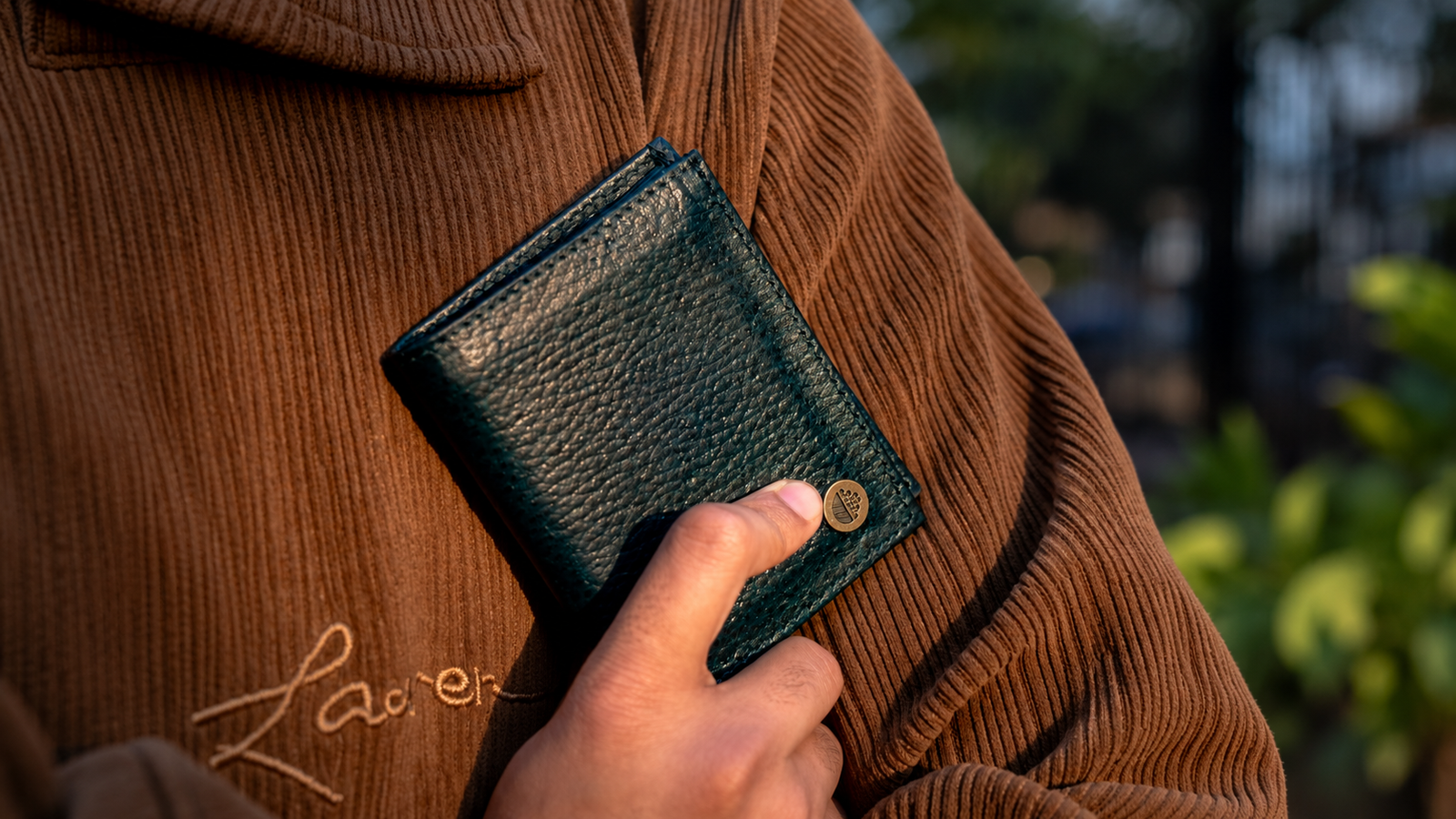
SriJeevanam follows this material direction by developing plant-based leather products using upcycled agricultural residue, combined with a bio-based adhesive and other formulation components.
This approach turns agricultural resources into functional everyday products such as wallets and Cardholders bringing together material innovation, conscious design and everyday usability.
The bigger opportunity is simple: what was once considered agricultural waste can become a useful material for next generation of products.