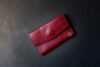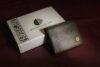
If you are looking for sustainable alternatives to leather accessories, you will quickly come across terms such as vegan leather, plant-based leather, faux leather, synthetic leather, bio-based leather, pineapple leather, cactus leather and mushroom leather.
But these terms do not all mean the same thing.
Vegan leather does not automatically mean plant-based does not automatically mean plastic-free, and bio-based does not automatically mean bio-degradable.
Some leather alternatives are made primarily from PU or PVC, while newer materials use agricultural waste, plant fibre, cork, mycelium or food-industry by products. The environmental performance can therefore vary considerably from one material to another.
So, what are the best sustainable alternatives to leather, and what should you actually look for when buying a wallet, bag, cardholder, or other leather accessory?
Why are People looking for Alternatives to Leather?
Leather has traditionally been valued for its strength, flexibility and ability to develop a distinctive appearance with use. However, its environmental impact dependes on factors including livestock production, tanning processing, water consumption, chemicals, and waste.
The Food and Agriculture Organization (FAO) reports that tanning one tonne of raw hides, can require approximately 50 cubic metres of water, while generating significant quantities of trimmings, shavings and finishing waste.
This has encouraged the development of leather-free and vegan alternatives that avoid animal hides.
But replacing animal leather with any material labelled “Vegan” does not automatically solve every environmental problem.
This Distinction is becoming increasingly important.
What is Plant-Based Leather?
Plant-based leather generally refers to leather-like materials made partly or substantially from plant-derived fibres, agricultural residues or other bio-logical resources.
Examples include:
- Pineapple leaves
- Cactus
- Apple waste
- Grape Waste
- Banana Waste
- Coconut residues
- Cork
- Agricultural residues
- Mycelium
Material such as pinatex, developed using pineapple leaf fibres, demonstrate how agricultural by-products can be converted into materials for fashion and accessories.
Kamakhyaa’s explanation of Plant-based leather makes an important distinction: plant-based leather is not simply raw leaves stitched together. Plant fibres or agricultural waste are proposed and engineered with binders or other components to achieve the strength, flexibility and surface characteristics required for products.
This is an important pint because the final material can be vary different from the original plant.
Is Vegan Leather the same as plant-based leather?
No.
This is one of the most important questions consumers should understand.
Vegan leather describes a material that does not use animal-derived leather, it can be made from synthetic polymers such as PU or PVC, or from newer plant- based and bio-based materials.
Plant-based leather referes mre specifically to materials where plant-derived or agricultural resources from an important part of the material.
Therefore:
All plant-based leather can be Vegan, but not all vegan leather is Plant-based.
Tumbledry’s guide similarly explains that vegan leather can be made from different materials, including PU, PVC, cork, apple, pineapple leaves, cactus and mycelium.
This is why simply seeing the word “Vegan” on a product label is not enough to understand its environment profile.
Is Vegan Leather made of Plastic?
Sometimes, Yes.
PU and PVC are widely used in synthetics leather because they can create a flexible, consistent and leather- like surface.
This is also where an important criticism of “Plant-based leather” comes in.
A discussion on Reddit’s r/malefashionadvice highlights consumer concerns that many products marketed as plant-based leather still contain synthetics polymers, The discussion specifically points to examples such as pinatex and grape-based materials and questions how much of the finished material is actually plant-derived versus synthetic.
This criticism should not be dismissed.
It actually gives consumers a useful question to ask:
“How much of the finished material is Plant-based, and What makes up the rest?”
A material can contain agricultural waste while still requiring PU, PLA, resins or other binders for performance.
That does not automatically make the material a bad choice. It simply means that “plant-based” should not be interpreted as “100 % natural” or “ Plastic-free” unless the manufacturer can substantiate that claim.
What are the main Sustainable Alternatives to Leather?
- Pineapple Leather- Pinatex
Pinatex is made using fibres extracted from pineapple leaves.
The concept is particularly interesting because the leaves are an agricultural by-product rather than a dedicated crop grown specifically for leather production.
However, pinatex is not simply pineapple fibre. Its different formulation can contain PLA, bio-PU and Pu components.
This make it a good example of why consumers should look at the complete material composition, rather than judging sustainability from the name alone.
- Cactus-based Leather
Cactus-based materials have gained attention as alternatives for bags, footwear and accessories.
Desserto is one of the better-known examples.
Cactus-based materials demonstrate how plants requiring comparatively different agricultural inputs can become sources for leather-like surfaces. However, coatings, binders, and backing materials still influence the final environmental profile.
- Mushroom Leather and Mycelium
Mycelium is the underground network of fungi and has become one of the most interesting areas of material innovation.
Companies such as MycoWorks have developed engineered mycelium materials for fashion, footwear and other applications.
The advantage of mycelium is that it is grown rather than harvested from an animal or attracted from fossil resources, However, production energy, rocessing, coatings, and manufacturing scale still matter.
- Grape-based Leather
Grape waste is another example of waste valorisation.
Compaines such as VEGEA use grape-processing by-products to develop leather-like materials for fashion and other applications.
This approach connects the food and beverage industry with the material industry by giving another use to a processing by-product.
- Apple-based Leather
Apple-based materials demonstrate another route for transforming food-industry residues into higher-value products.
As with other bio-based materials, however, the sustainability of the final products depends on its complete formulation and manufacturing process.
- Cork
Cork is one of the more established natural alternatives for accessories.
It can be used for wallets, bags and other products without trying to exactly reproduce the characteristics of animal hide.
Its natural texture can instead become part of the design.
- Agricultural-waste-based Materials
Agricultural residues are increasingly being researched as raw materials for new materials.
This includes residues from crops such as Sugarcane, pineapple, rice husk, other agricultural sources.
The Idea Is simple:
Instead of treating agricultural residue only as waste, can some of it become a useful material?
This is also where newer Indian material innovations are becoming relevant, particularly for accessories such as wallets, card holders and bags.
Is Every Plant-based Leather Sustainable?
No.
This may be the most important answer in the entire discussion.
A plant-based material can still involve:
Synthetic Coatings
Petroleum-derived Polymers
Energy-intensive processing
Chemical binders
Difficult to recycle composites
Long transportation distances
Short product lifespans
At the same time, conventional leather and synthetics leather also have their own environmental considerations.
A 2026 study comparing different footwear materials found that bovine leather had the highest environmental impacts within its particular cradle-to-gate assessment, while also highlighting a significant trade off between environmental impact and durability.
This matters because a sustainable accessory is not sustainable simply because of what it is made from.
How long it remains useful matters too.
Why Does Durability matter in sustainable Accessories?
Imagine two wallets
One Is made from a lower-impact material but needs to be replaced every year.
The other has a somewhat higher production footprint but remains functional for five or six years.
The environment comparison becomes more complicated.
Research into bio-based textile routes has found that durability and replacement frequency can substantially influence environmental outcomes.
This is why product lifespan, repairability and reuse should be part of the sustainability conversation.
Tumbledray’s articles approaches this question from another useful angle: it provides practicals guidance for extending the life of vegan leather products, including gentle cleaning, avoiding excessive heat and sunlight, proper storage and careful stain treatment.
The principle is worth carrying into sustainable accessories generally:
The most sustainable product is not necessarily the one with the most impressive material label-It is also the one that stays useful for longer.
What should you check before buying a sustainable Leather Alternatives?
Before purchasing a sustainable Wallet, bag, card holder or accessories, ask these questions:
- What is the main material?
Look beyond terms such as “Vegan” or “eco-friendly”.
- What percentage is bio-based?
If a product claims to be plant-based, check whether the manufacturer provides composition information.
- Does it contain PU or PVC?
Synthetic coatings and backing materials can significantly change the material’s environmental characteristics.
- Is it biodegradable?
Never assume that bio-based automatically means biodegradable.
- How Durable is it?
Look for information about abrasion, cracking, flexing and everyday use.
- Can it be repaired or reused?
Longer useful life can reduce the need for replacement.
- What happens at the end of its life?
A material’s sustainability story does not end when the consumer stops using it.
So, what is the most Sustainable Alternative to Leather?
There is no universal winner.
Pinatex, Cactus materials, mycelium, grape waste, apple waste, cork and agricultural- conventional animal leather.
Some focus on agricultural by-products. Others use biological growth systems or naturally renewable materials. Some still rely partly on synthetic polymers.
That is why comparing materials only by labels such as “ Vegan,” “Plant-based” or “Eco-friendly” can be misleading.
The better approach is to look at the entire material story:
What is it made from? How is it produced? How much synthetics material does it contains? How long will it last? Can it be reused or repaired? And what happens after its useful life?
For consumers, that means making a more informed choice rather than searching for a single “perfect” material.
For manufacturers, it means being transparent about composition and environmental claims.
And for the sustainable fashion industry, the bigger opportunity may be to move beyond simply replacing leather and start designing materials and products around resource efficiency, durability, transparency and circularity.